The Paradox of Clean Skin: Why Over-Cleansing Weakens Barriers
Think 'squeaky clean' means healthy? Think again. Discover why over-cleansing is the root cause of oily skin, acne, and barrier damage.

The Paradox of Clean Skin: Why Over-Cleansing Weakens Barriers
Clean skin is often mistaken for healthy skin. Growing up in India, we are conditioned to believe that oil, sweat, and dirt are the enemies. We wash our faces when we wake up, when we return from school or work, and before bed. We gravitate toward foaming face washes that strip every ounce of grease, leaving us feeling "squeaky clean."
However, modern dermatology consistently shows that over-cleansing is one of the most damaging things you can do to your skin. It creates a vicious cycle of dehydration and oil production that we call The Cleansing Paradox. The more you wash, the worse your skin gets.

In this deep dive, we explore the biology of cleansing, the myth of the "squeak," and how to clean your skin without destroying its defenses.
How Cleansers Actually Work (The Surfactant Trap)
To understand the damage, you must understand the chemistry. Most cleansers rely on ingredients called Surfactants (Surface Active Agents). These molecules have a head that loves water (hydrophilic) and a tail that loves oil (lipophilic). They grab onto the oil on your face and rinse it away with water.
The problem? Surfactants aren't smart. They cannot tell the difference between the "bad" oil (excess sebum, pollution, makeup) and the "good" oil (ceramides, fatty acids, cholesterol) that make up your moisture barrier.
Strong surfactants like Sodium Lauryl Sulfate (SLS) strip everything indiscriminately. When you remove the "good" oil, you compromise the integrity of your skin barrier. This leads to gaps between cells, allowing water to escape and irritants to enter.
The pH Problem: Why Water Isn't Neutral
Your skin has a natural protective layer called the Acid Mantle, which sits at a pH of around 4.5 to 5.5. This acidity is crucial for keeping bacteria like P. acnes in check.
Tap water has a pH of 7 (neutral), and many bar soaps have a pH of 9-10 (alkaline). Every time you wash your face, you temporarily raise your skin's pH. It takes your healthy skin hours to restore this balance. If you wash 3 times a day, your skin never gets the chance to recover its acidic defense, leaving you vulnerable to acne bacteria.
Understanding TEWL (Transepidermal Water Loss)
When you strip the lipids and disrupt the pH, you remove the seal on your skin. Imagine leaving a water bottle open in the sun. The water evaporates. This process is called Transepidermal Water Loss (TEWL).
When TEWL increases, your skin cells dehydrate. They shrink, creating even larger gaps for bacteria to enter. This triggers inflammation, redness, and sensitivity.
The "Oily Skin" Trap
People with oily skin suffer the most from this paradox. When you strip all the oil with a harsh face wash, your skin's sebaceous glands receive a panic signal: "We are dry! We are unprotected!"
In response, they go into overdrive and produce more oil to compensate. So, you wash your face because it's oily. But because you washed it too harshly, it becomes oilier within 2 hours. You wash again. The cycle repeats, and your barrier gets weaker every time.
If you are stuck in this loop, check our Summer Oily Skin Routine for gentle alternatives to break the cycle.
Signs You Are Over-Cleansing
- Immediate Tightness: If you can't smile comfortably after washing, your cleanser is too strong.
- Rebound Oil: Your T-zone becomes a grease ball 2 hours after washing, while your cheeks feel dry.
- Dullness: Your skin lacks a natural glow because the surface is rough and dehydrated.
The Correct Cleansing Protocol
You don't need to stop washing, but you need to wash smarter. Follow these rules to protect your barrier:
- Frequency Limit: Cleanse no more than twice daily. For many dry skin types, washing with just water in the morning is sufficient and beneficial.
- Texture Matters: Switch from high-foam cleansers to milk, cream, or gel cleansers that don't lather excessively. Low lather usually means less harsh surfactants.
- The 60-Second Rule: Massage your gentle cleanser for 60 seconds to break down dirt effectively without needing harsh chemicals.
- The Weekly Reset: Instead of daily scrubbing or double cleansing (which can be too much for sensitive skin), move your deep cleansing to a weekly ritual.
For a broader look at how cleansing fits into a holistic regimen, refer to our Indian Skincare Routine Guide.
The Soap-Free Solution
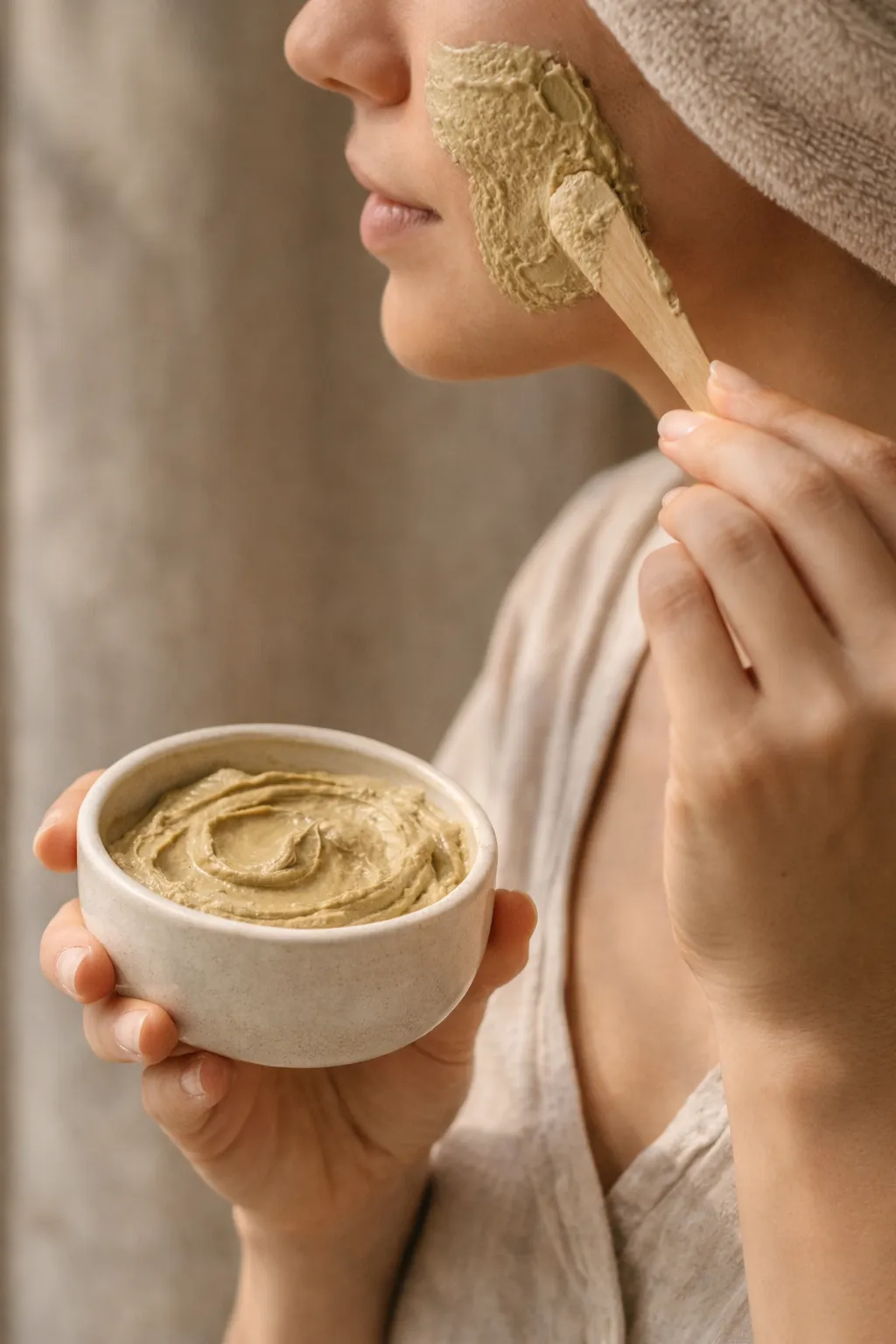
The Raw Multani Mitti works differently. It absorbs oil via ionic exchange, not chemical stripping. It leaves the essential lipids intact while removing the surface grease and dead cells.
This makes it the perfect "Deep Cleanse" for over-washed skin. It resets the oil balance without triggering the rebound effect.
Shop The Raw Multani MittiWritten by Syed Muzamil — Skincare Researcher & Founder.
Try These Clean, Natural Essentials
Gentle, ayurvedic-inspired skincare to support the routine in this article.
Vitamin Orange
A refreshing blend of Multani Mitti and orange peel powder for brighter-looking skin.
The Raw
Pure, unblended Multani Mitti clay for deep cleansing, oil control, and clear-looking skin.", description: "The Raw is Ethereal Glow’s purest form of Multani Mitti — finely milled, unblended, and free from additives. Designed for oily and acne-prone skin, it helps absorb excess oil, cleanse pores, and refresh tired skin naturally.
Complete Your Ritual
Finish reading? Take the next step with products that match this routine.
Vitamin Orange
A refreshing blend of Multani Mitti and orange peel powder for brighter-looking skin.
The Raw
Pure, unblended Multani Mitti clay for deep cleansing, oil control, and clear-looking skin.", description: "The Raw is Ethereal Glow’s purest form of Multani Mitti — finely milled, unblended, and free from additives. Designed for oily and acne-prone skin, it helps absorb excess oil, cleanse pores, and refresh tired skin naturally.
Related Articles
Is Your Moisture Barrier Damaged? A Dermatologist Checklist
Tightness, stinging, or sudden acne? These aren't just 'bad skin days'. Use this diagnostic checklist to identify barrier damage and fix it safely.
Tan vs Hyperpigmentation: What Most People Get Wrong
Treating pigmentation like a tan can ruin your skin. Learn the biological differences, take the self-diagnosis test, and stop scrubbing away your barrier.
Why Pigmentation Returns Every Summer: The Barrier-Melanin Link
Does your pigmentation fade in winter only to return in summer? It's not just the sun. Discover how thermal stress and barrier damage trigger 'melanin memory'.
Common Questions
Tags
Turn today's skincare lesson into a real glow.
Explore our Multani Mitti and ubtan blends crafted for Indian skin.