How to Layer Actives With Multani Mitti Safely (Niacinamide, BHA)
Clay + actives wreck barriers when stacked wrong. Exact wait times, night scheduling, and skin-type rules for niacinamide, salicylic acid and multani mitti.
Last updated: August 2026 | Medically reviewed against peer-reviewed sources
You can use niacinamide and multani mitti in the same routine, but never layered at the same moment — and salicylic acid should live on different nights than clay entirely. The safe pattern: clay mask on clay night (rinse-off), actives on actives nights (leave-on), separated by at least a day.
Niacinamide is a water-soluble vitamin (vitamin B3) that regulates sebum production and strengthens the skin barrier, while salicylic acid is an oil-soluble beta-hydroxy acid that excretes inside pores to dissolve congestion. Understanding this distinction is what makes safe layering possible.
Why clay and actives shouldn't be layered together
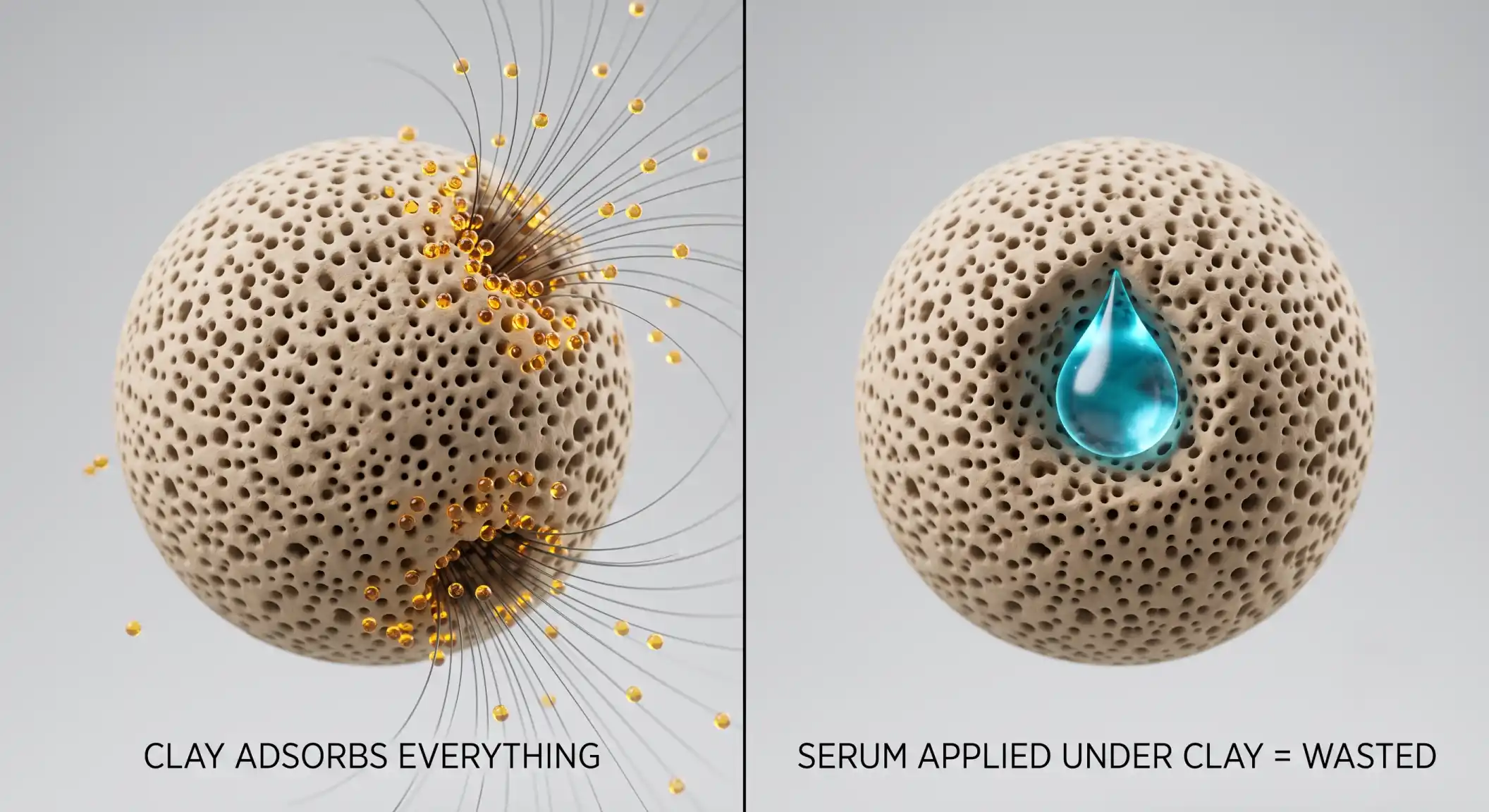
Clay is a rinse-off adsorbent: it works by pulling water, oil, and dissolved substances out of skin's surface during its 10–15 minute window. If you mix niacinamide serum into your clay paste, or apply serum under a drying mask, two things go wrong. First, the clay adsorbs the active itself — you pay for ingredients that end up rinsed down the drain. Second, as the mask enters its dehydrating phase, actives concentrated against compromised skin dramatically raise irritation risk: stinging, redness, and flaking.
There's also a pH conflict. Salicylic acid needs a mildly acidic environment (roughly pH 3–4) to work, while raw clay pastes are alkaline. Applied together, both underperform.
Niacinamide + multani mitti: the friendly pairing
Niacinamide is the one active that genuinely complements clay — just not simultaneously. Used after a clay session (once skin is cleansed and towel-dried), niacinamide at 4–5% helps replenish the barrier and regulate the sebum the clay just removed. Its large-molecule tolerance profile means low stinging risk even on freshly masked skin.
- Same evening, sequenced: clay mask (rinse at 10 minutes) → pat dry → niacinamide serum → moisturizer.
- What to avoid: mixing the powder directly into niacinamide serums — DIY clay-serum blends destabilize the serum and waste product.
Salicylic acid + multani mitti: different nights only
Salicylic acid (BHA) already performs deep pore exfoliation. Adding clay's physical draw on the same night stacks two drying forces and commonly produces the exact tightness-and-flaking people blame on "purging." Schedule them apart:
| Night | Treatment | Purpose |
|---|---|---|
| Monday | Multani mitti mask | Surface de-grease, clarification |
| Tuesday | Moisturizer only (recovery) | Barrier reset |
| Wednesday | Salicylic acid 2% | In-pore exfoliation |
| Thursday | Moisturizer only | Barrier reset |
| Friday | Multani mitti mask + niacinamide after | Clarify + replenish |
| Saturday | Niacinamide or rest | Sebum regulation maintenance |
This alternating pattern gives you clay's instant matte finish and BHA's deeper comedone work without ever stacking their drying effects. The template plugs into the fuller frameworks in our Indian skincare routine guide and, for humid months, the oily-skin summer routine. If your barrier is already angry — stinging on water application, persistent tightness — pause everything except moisturizer and check our barrier damage checklist before restarting.
A sample weekly schedule for oily Indian skin
For humid-climate oily skin, the table above is the starting template. Adjustments: in peak summer you can run the Friday clay slot and add a midweek T-zone-only mini-mask (5 minutes); in winter drop to one clay night per week and swap salicylic acid to once weekly. The principles stay constant — one drying treatment per night, moisturizer after everything, sunscreen every morning regardless of weather. Our mineral vs chemical sunscreen guide for India covers the morning half of that equation.
Layering mistakes that cause irritation
- Mixing serums into clay paste. Wastes the active and concentrates it unpredictably.
- Applying BHA immediately post-clay. Compromised skin plus acid equals sting; wait until the next scheduled active night.
- Using clay as a "pre-treatment" for actives. Pre-stripped skin absorbs actives faster but tolerates them far worse.
- No recovery nights. Barrier repair happens on do-nothing nights; schedules without them fail within weeks.
- Ignoring the over-cleansing trap. If you also wash face aggressively twice daily, no schedule survives — see why over-cleansing weakens barriers.
When you do run your clay night, ingredient quality decides tolerance. Gritty, poorly processed clay adds micro-abrasion on top of chemical exfoliation cycles. Our triple-sifted The Raw multani mitti keeps the particle profile smooth so the weekly ritual stays predictable alongside any actives routine.
FAQs
Can I apply niacinamide after multani mitti?
Yes — it's the best post-clay active. After rinsing and drying, niacinamide replenishes barrier lipids and continues sebum regulation with minimal sting risk.
Can I mix multani mitti with salicylic acid?
No. Their pH requirements conflict, and combining a rinse-off adsorbent with a leave-on acid doubles drying. Run them on separate nights.
How long after a clay mask can I use actives?
Wait until your next scheduled active night — typically 24–48 hours. Same-evening sequencing is safe only for niacinamide after full rinsing and drying.
Why does my skin burn when I layer products?
Stinging usually signals a compromised barrier from over-exfoliation, not a bad product. Pause actives, moisturize only, and rebuild for a week before reintroducing anything.
Start with the Purest Base
Clay + actives work best when your clay is clean and consistent. Our The Raw Multani Mitti is triple-sifted so every weekly session feels the same.
Shop The Raw Multani Mitti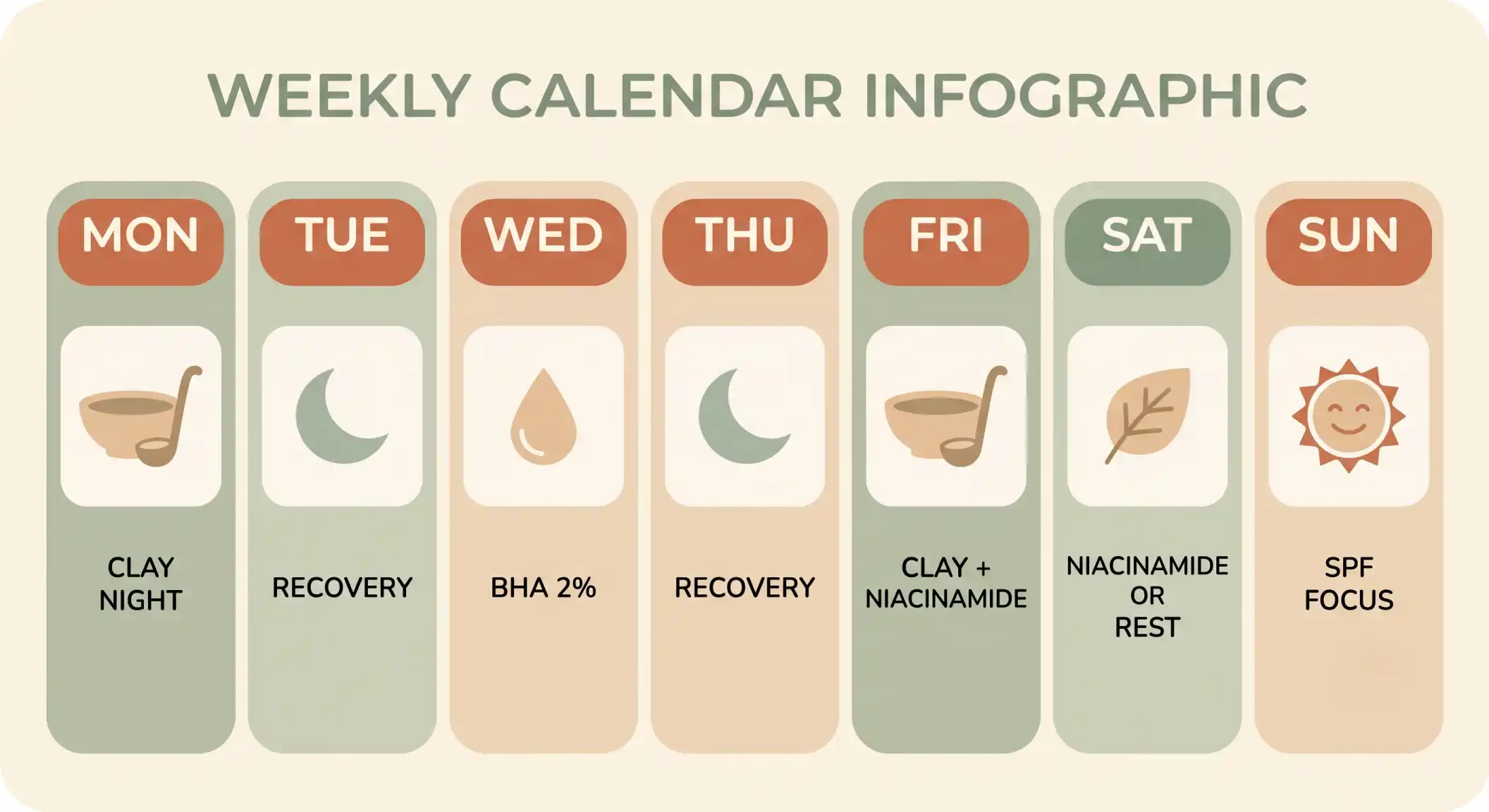

Est. Glow Editorial Team
Complete Your Ritual
Finish reading? Take the next step with products that match this routine.
Related Articles
Summer Routine for Oily Skin in India (AM/PM, Sweat‑Proof)
AM/PM routine for oily skin in Indian summers: calm oil, prevent breakouts, and stay shine‑free with fast‑dry PA++++ sunscreen. Barrier‑friendly layers and practical picks for consistent reapplication.
Skin Brightening Without Bleaching: Safe Guide for Indian Skin
Evidence-based brightening for Indian skin: what works (niacinamide, azelaic acid, vitamin C), what damages, and how natural clays support even tone safely.
Can You Use Multani Mitti Every Day? Science-Based Clay Guide
No — daily use damages your barrier. Get the dermatologist-aligned frequency by skin type, the 10-minute rule, and the clinical evidence on clay masks.
Common Questions
Tags
Turn today's skincare lesson into a real glow.
Explore our Multani Mitti and ubtan blends crafted for Indian skin.