Skin Brightening Without Bleaching: Safe Guide for Indian Skin
Evidence-based brightening for Indian skin: what works (niacinamide, azelaic acid, vitamin C), what damages, and how natural clays support even tone safely.
Last updated: August 2026 | Medically reviewed against peer-reviewed sources
Skin brightening means restoring your skin's natural, even tone — not bleaching it. The evidence-based path for Indian skin combines daily broad-spectrum sunscreen, proven pigment-regulating actives like niacinamide and azelaic acid, gentle support ingredients such as licorice root extract, and patience: visible change takes 8–12 weeks of consistency.
Hyperpigmentation is the overproduction or uneven distribution of melanin, triggered in Indian skin most often by sun exposure, post-inflammatory responses after acne, and hormonal fluctuation. Melanin itself is protective — the goal of brightening is correcting uneven patches, not erasing your natural color.
Brightening vs whitening vs bleaching: know the difference
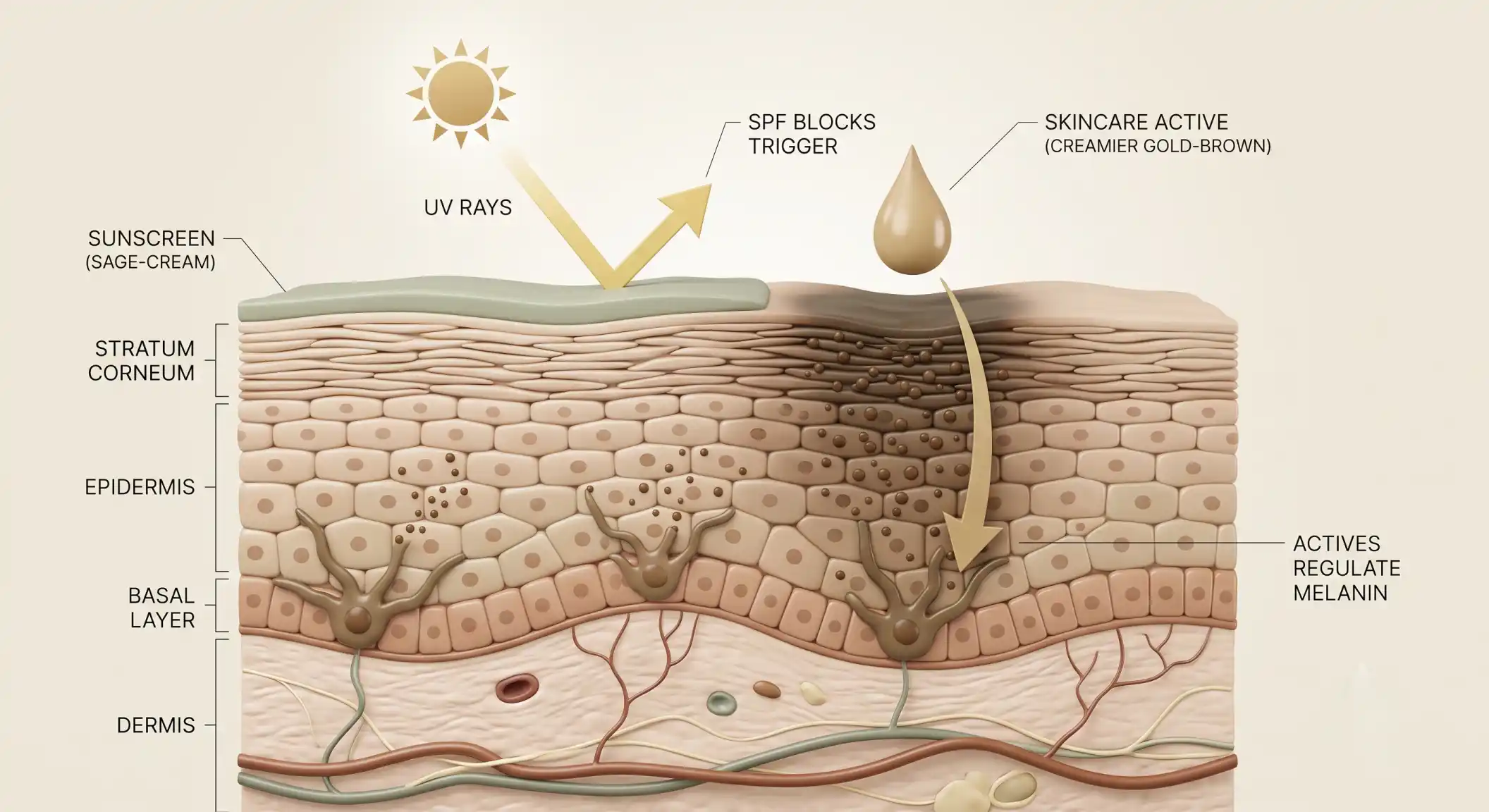
These terms get used interchangeably in Indian marketing, and the confusion is dangerous. Brightening returns skin to its own baseline tone by reducing excess pigment — safe and achievable. Whitening implies changing beyond your natural baseline — biologically implausible through topical means and dominated by harmful products. Bleaching chemically destroys melanocytes — damaging, sometimes permanently, and never advisable. Any product promising to make you "fair" is selling bleach-adjacent chemistry or placebo. Regulators have repeatedly flagged creams containing undisclosed steroids and hydroquinone sold in this category; the safest rule is that legitimate brightening products state mechanisms, not miracles.
What actually works: evidence-ranked ingredients
| Ingredient | Evidence level | Mechanism | Notes for Indian skin |
|---|---|---|---|
| Sunscreen SPF 50 PA++++ | Gold standard | Prevents the UV trigger entirely | Non-negotiable; reapply at midday |
| Azelaic acid 10% | Strong (Rx at 15–20%) | Inhibits tyrosinase; anti-inflammatory | Excellent for PIH + acne together |
| Niacinamide 4–5% | Strong | Blocks melanosome transfer | Well tolerated; pairs with everything |
| Vitamin C 10–15% | Moderate-strong | Antioxidant; tyrosinase inhibition | Store away from light; morning use |
| Licorice root extract | Moderate | Glabridin disperses existing melanin | Gentle; common in Ayurvedic formulas |
| Alpha arbutin 2% | Moderate | Slow-release tyrosinase inhibitor | Stable, low-irritation option |
For a treatment-by-treatment walkthrough, our pillar guide on how to fade hyperpigmentation safely in India ranks every option by evidence strength. The mechanism that matters most is upstream: preventing the inflammation and UV exposure that trigger pigment in the first place. That's why our guide to treating dark spots without triggering PIH treats aggression itself as the enemy — in deeper Indian skin tones, harsh treatments frequently cause more pigmentation than they resolve.
What to avoid: the damage list
- Undisclosed steroid creams sold as "fairness" solutions — cause skin thinning, steroid-dependent rosacea, and rebound hyperpigmentation.
- High-concentration hydroquinone without supervision — risks ochronosis (paradoxical blue-black darkening) with prolonged unsupervised use.
- Lemon juice and raw kitchen acids — unpredictable pH, phototoxic compounds, and barrier destruction; the classic DIY error documented in our Multani mitti vs besan comparison.
- Over-exfoliation cycles — every micro-wound in melanin-rich skin is a potential new dark spot. This is why pigmentation returns every summer for people who scrub harder instead of protecting smarter.
Where natural ingredients fit
Natural ingredients earn their place as support, not primary treatment. Licorice root has genuine tyrosinase-inhibiting evidence. Multani mitti contributes indirectly — by keeping surface cell turnover clean and preventing the pore congestion that leads to post-acne marks in the first place. Weekly clay sessions (never daily) maintain the clear canvas that brightening actives then work on — pair them with the daily habits in our natural glow skin guide. What natural ingredients cannot do is inhibit melanin synthesis the way targeted actives do; claims otherwise are marketing.
If your brightening goal follows a tan rather than patchy pigmentation, read tan vs hyperpigmentation: what most people get wrong first — tans fade with time and sunscreen discipline; true pigmentation needs actives.
A realistic brightening routine
- Morning: gentle cleanse → vitamin C serum → gel moisturizer → SPF 50 PA++++ (two-finger dose).
- Alternate evenings: azelaic acid 10% OR niacinamide 5%, followed by moisturizer.
- Once weekly: multani mitti mask (10–15 minutes, tacky-phase rinse) to keep surface turnover clean.
- Every day: no picking, no aggressive scrubs, no skipping sunscreen — including cloudy days and indoor-window days.
Support the process from clean foundations: our Vitamin Orange face pack pairs Multani Mitti with orange peel powder for the weekly clarity session that keeps surface dullness from masking your progress.
FAQs
How long does skin brightening take?
With consistent sunscreen and evidence-based actives, expect initial improvement at 8 weeks and meaningful even-tone change at 12–16 weeks. Anything promising faster results is either exfoliating deception or unsafe.
Is skin brightening permanent?
The corrected tone persists as long as triggers stay managed. Pigment is a response system — unprotected sun exposure or new inflammation restarts it.
Can multani mitti whiten skin?
No. It clarifies surface buildup so your natural even tone shows through. Nothing topical changes your genetically determined base color — and attempts to force it damage skin.
Which is the safest brightening ingredient for daily use?
Niacinamide 4–5%. It has strong safety data, layers with everything, and addresses both pigment transfer and sebum — ideal for Indian oily-combination skin.
Start with the Purest Base
Brightening starts with a clean canvas. Our Vitamin Orange face pack pairs Multani Mitti with orange peel powder for your weekly clarity ritual.
Shop Vitamin Orange Face Pack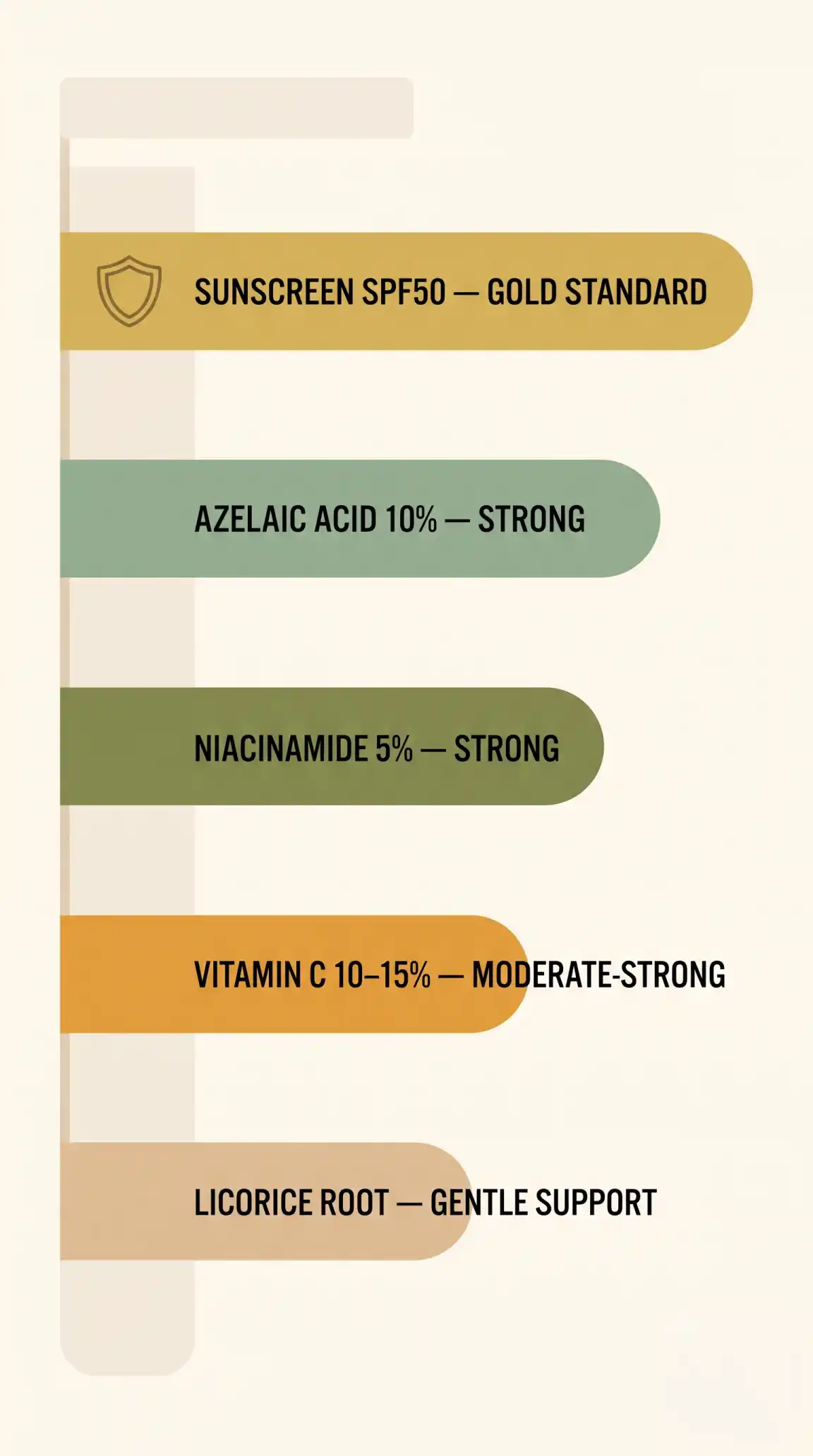

Est. Glow Editorial Team
Complete Your Ritual
Finish reading? Take the next step with products that match this routine.
Related Articles
Fade Hyperpigmentation Safely in India (8–12 Week Plan)
Derm‑approved plan to fade dark spots in India: vitamin C AM, niacinamide, azelaic/mandelic at night, plus strict PA++++ sunscreen. Safe layering, timelines, and texture tips.
How to Layer Actives With Multani Mitti Safely (Niacinamide, BHA)
Clay + actives wreck barriers when stacked wrong. Exact wait times, night scheduling, and skin-type rules for niacinamide, salicylic acid and multani mitti.
Tan vs Hyperpigmentation: What Most People Get Wrong
Treating pigmentation like a tan can ruin your skin. Learn the biological differences, take the self-diagnosis test, and stop scrubbing away your barrier.
Common Questions
Tags
Turn today's skincare lesson into a real glow.
Explore our Multani Mitti and ubtan blends crafted for Indian skin.