Why Pigmentation Returns Every Summer: The Barrier-Melanin Connection
Does your pigmentation fade in winter only to return in summer? It's not just the sun. Discover how thermal stress and barrier damage trigger 'melanin memory'.


Why Pigmentation Returns Every Summer: The Barrier-Melanin Link
It is a heartbreaking cycle familiar to millions of Indians: You spend six months diligently applying serums, protecting your skin, and fading dark spots during the winter. Your skin looks clear, radiant, and even. Then, May arrives. Within two weeks of the rising mercury, those old dark patches—the ones you thought were gone forever—begin to shadow back into existence.
Most people blame the sun. They buy higher SPF, wear hats, and stay indoors. Yet, the pigmentation returns. Why?
The answer lies in a biological mechanism often ignored by standard beauty advice: The Barrier-Melanin Connection. In this comprehensive guide, we are going to strip away the marketing fluff and look at the raw dermatological science of why Indian skin 'remembers' pigmentation, and how heat—not just UV rays—is the hidden enemy.
The Science: Why Indian Skin is Different

To solve the problem, you must understand the canvas. Indian skin typically falls under Fitzpatrick Scale IV to VI. While this melanin-rich skin offers excellent natural protection against skin cancer and aging, it comes with a trade-off: Hyper-reactive Melanocytes.
Your pigment-producing cells (melanocytes) are not just factories; they are soldiers. They are constantly on high alert. In lighter skin types, these soldiers sleep unless burned. In Indian skin, they are light sleepers. They wake up at the slightest sign of stress.
The Toxic Triad of Summer Melanin
While UV rays are the primary trigger, they are not the only one. Summer creates a perfect storm for pigmentation relapse via:
- Ultraviolet (UV) Radiation: Direct stimulation of pigment production.
- Thermal Stress (Heat): The silent killer. Rising skin temperature increases inflammation.
- Barrier Compromise: Sweat and humidity strip the lipid layer.
The Barrier-Melanin Feedback Loop
This is the critical concept that will change how you treat your skin. A damaged barrier is a loud barrier.
Imagine your skin barrier is a roof. When the roof leaks (due to harsh summer face washes or dehydration), the people inside the house (your skin cells) panic. They send out distress signals called cytokines. These inflammatory messengers travel down to the melanocytes and scream, "We are under attack! Build a shield!"
The melanocytes respond by producing melanin and sending it to the surface. This is why you get dark spots even if you stay indoors. If your barrier is damaged by heat or harsh soaps, your skin thinks it is being attacked and produces pigment to defend itself.
For a deeper understanding of how seasonal changes affect this loop, read our guide on Seasonal Skincare Adjustments.
The Solution: Barrier-First Pigmentation Control
To break the cycle, we need a paradigm shift. We move from "Attacking the Spot" to "Calming the Shield." Here is the protocol for Indian skin during high-heat months.

Step 1: Thermal Regulation (Cooling)
You must physically lower the temperature of your skin. Heat causes vasodilation (widening of blood vessels), which brings inflammatory blood to the surface.
- The Ice Roller Trick: Use a cool (not freezing) roller or a cold spoon upon waking up to constrict vessels.
- Aloe Vera Gels: Keep them in the fridge. Apply immediately after coming home from the sun.
- Mist Frequently: Evaporation cools the skin. Use simple rose water or thermal water.
Step 2: The Non-Stripping Cleanse
Summer makes us feel oily, so we reach for foaming, stripping face washes. Stop. Stripping the oil removes your barrier lipids. When lipids are gone, the "Panic Signal" is sent to melanocytes.
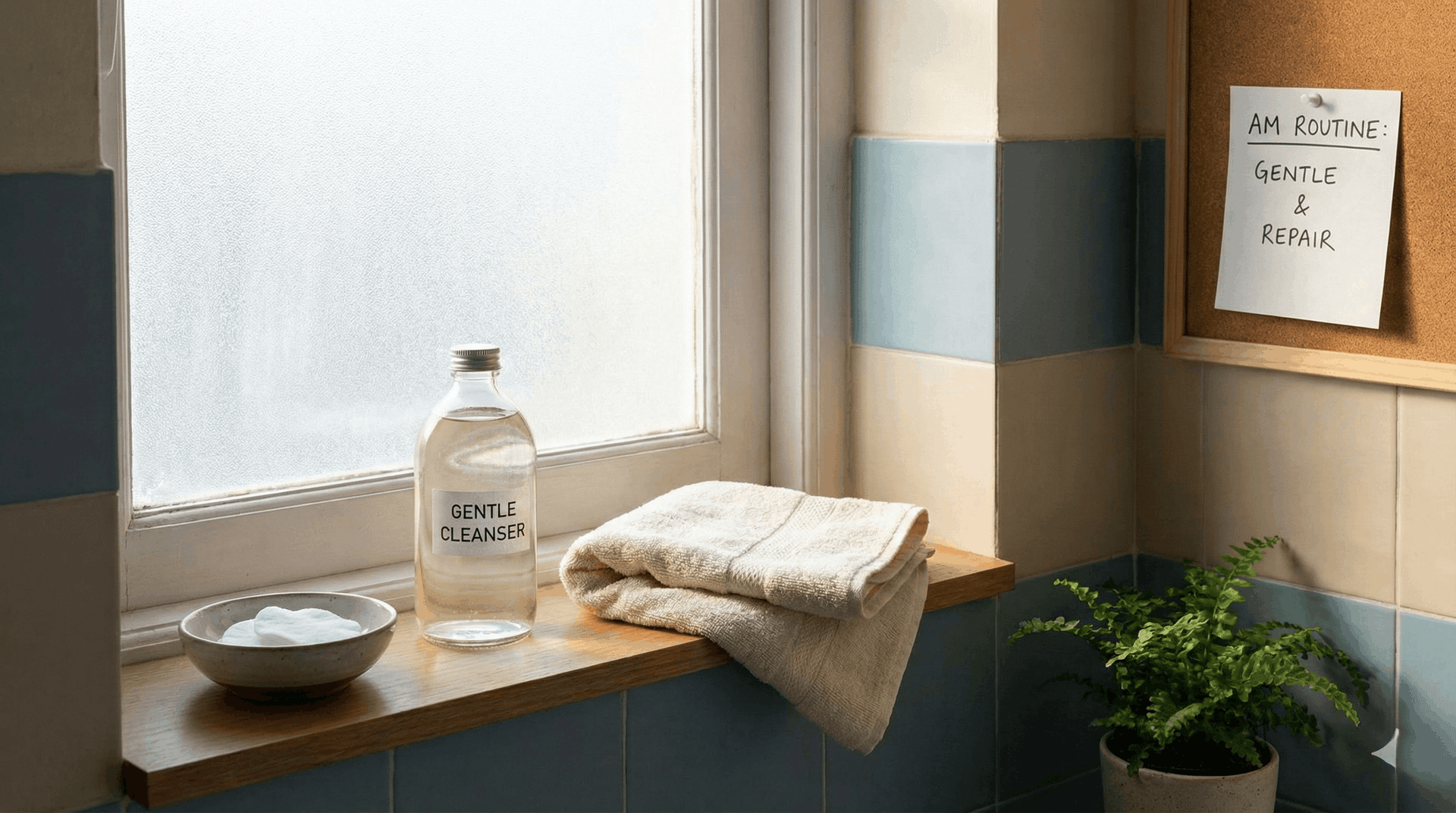
Switch to a gentle, non-foaming cleanser. If you struggle with oil, read our Summer Oily Skin Routine for safer alternatives.
Step 3: The Weekly Detox Ritual
You need to remove the build-up of sweat, salt, and sebum that clogs pores and causes micro-inflammation. However, you cannot use harsh scrubs.
The Raw Recommendation: Thermal Detox
Unlike chemical peels that generate heat, Multani Mitti is naturally cooling. The Raw Multani Mitti absorbs thermal energy while pulling out impurities.
The Ritual: Mix with cold Curd (Yogurt). The fats repair the barrier while the clay cools the skin.
Shop The Raw Multani MittiFinal Verdict
Pigmentation is not just a stain on the skin; it is a biological response to stress. If you want to stop the summer relapse, you stop treating your skin like an enemy and start treating it like a wounded shield. Cool it down, patch the holes, and the soldiers (melanocytes) will finally go back to sleep.
Written by Syed Muzamil — Skincare Researcher & Founder at Ethereal Glow.

Est. Glow Editorial Team
Complete Your Ritual
Finish reading? Take the next step with products that match this routine.
Related Articles
Tan vs Hyperpigmentation: What Most People Get Wrong
Treating pigmentation like a tan can ruin your skin. Learn the biological differences, take the self-diagnosis test, and stop scrubbing away your barrier.
Skin Brightening Without Bleaching: Safe Guide for Indian Skin
Evidence-based brightening for Indian skin: what works (niacinamide, azelaic acid, vitamin C), what damages, and how natural clays support even tone safely.
Can You Use Multani Mitti Every Day? Science-Based Clay Guide
No — daily use damages your barrier. Get the dermatologist-aligned frequency by skin type, the 10-minute rule, and the clinical evidence on clay masks.
Common Questions
Tags
Turn today's skincare lesson into a real glow.
Explore our Multani Mitti and ubtan blends crafted for Indian skin.